


From Rescue to Release: Treating a Bald Eagle for Lead Poisioning
Updated: Sep 16
This summer, a Bald Eagle was admitted to Back To The Wild with an elevated blood lead level of 20.8 µg/dL. The eagle would spend the next several weeks undergoing treatment and rehabilitation before it was ready to return to the wild.
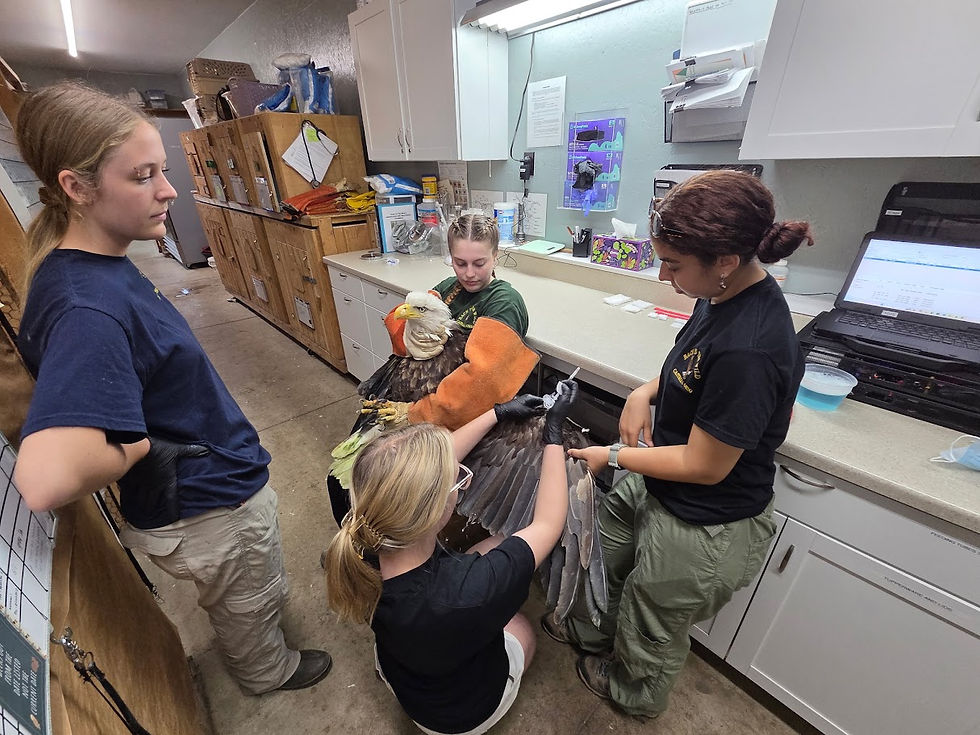
The Problem: Lead Poisioning
Lead poisioning is a serious and ongoing threat to Bald Eagles and other scavenging wildlife. Eagles can be exposed when they feed on carcasses or remains containing fragments of lead ammunition. Even a small amount of lead can cause neurological and physical problems, including weakness, poor coordination, and difficulty flying.
Treatment:
Our rehabilitation team treated the eagle with DMSA, a chelation medication used to help remove lead from the body, along with supportive care.
We continued monitoring the eagle's condition and blood level as treatment progressed. Eventually that leavel dropped from 20.8 µg/dL to 12.5 µg/dL.
Improving bloodwork was only one part of determining whether the eagle was ready for rleease. It also needed to demonstrate that it could fly well, maintain stamina, and function normally without assistance.
Preparing for Release
As the eagle recovered, it moved into one of our large outdoor flight enclosures. Here, our team could evaluate its flight strength, stamina, coordination, and overall condition. Before release, we needed to know that the eagle could fly strongly and confidently enough to survive on its own.

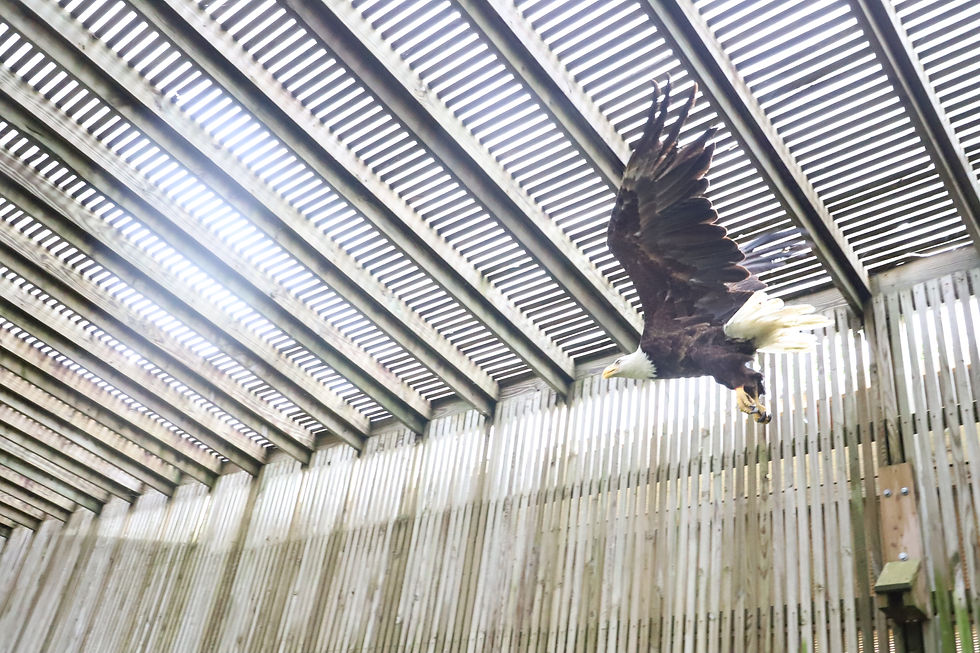
Back To The Wild
On July 18th, Bald Eagle 2026-0411 was released during our Summer Social, surrounded by members of the community who came out to watch its return to the wild.

Donor support helps provide the medications, food, supplies, housing, and daily care needed for the wildlife admitted each year. Cases like Bald Eagle 2026-0411 can require weeks of treatment & rehabilitation before an animal is ready for release.
On July 18th, all of that work ended with exactly what we work toward whenever possible, a release back to the wild.
As always, without YOU, there is no US for THEM!

Comments